
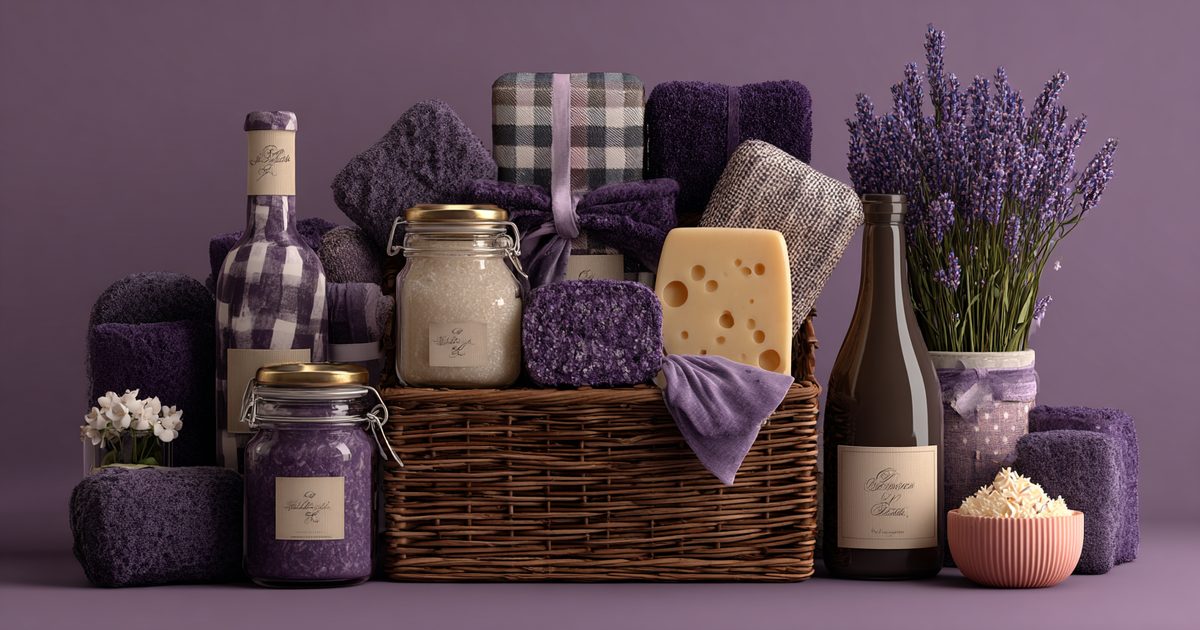
The hamper formula: build a brilliant gift basket for anyone
The hamper is gifting’s great shapeshifter: it scales from $20 to $200, suits everyone from the wants-nothing father-in-law to the office raffle, and can be fully bought, fully handmade, or funded by six relatives at once. It’s also quietly easy to get wrong — the supermarket-shelf assortment in cellophane that says “I panicked at a food aisle.”
The difference between that and a hamper someone photographs before opening is a formula.
The five-part formula
Every great hamper has a theme and five layers:
- The hero — one item that anchors the basket and earns the theme: the good bottle, the premium olive oil, the beautiful book, the handmade cutting board. Roughly a third of the budget goes here.
- The supporting cast — three to five items that serve the hero: the crackers and quince paste for the cheese, the cocktail bitters for the gin, the fancy socks for the movie-night box.
- The consumable filler — quality snackables in the theme’s orbit. This is where budget stretches; it’s also where supermarket panic shows, so keep it on-theme.
- The keeper — one non-consumable that outlives the basket: the etched coasters, the tea towel, the 3D-printed accessory, the nice glass. When the snacks are gone, this is what remembers you.
- The vessel itself — a basket is fine, but a usable container is a second keeper: a mixing bowl for a baking hamper, a toolbox for a maker one, a beach bag for summer.
Themes beat categories
“Food hamper” is a category; “Sunday breakfast in bed” is a theme — pancake mix, real maple syrup, good coffee, a mug, the weekend paper voucher. Theme candidates write themselves off a person’s wishlist and interests: the curry-night kit, the new-parent survival box, the garden starter, the local-makers sampler. Specificity is the whole trick; a themed hamper reads as curated, the same items unthemed read as assembled.
The DIY spectrum
Hampers happily mix bought and made — in fact the mix is the sweet spot. Home-preserved jam next to bought crackers, workshop coasters under bought wine, home-baked shortbread beside the good chocolate. Handmade components raise the perceived care of every bought item around them. (Full guide to edible handmade components coming mid-November — jams, rubs and bake-ahead treats all want lead time.)
Hampers as group gifts
For extended families, the hamper is the ideal pooled gift: one organiser sets the theme, contributors each fund or contribute a component, and the result outclasses anything any one person would have bought. Claim it as a single item on the family system so the recipient sees nothing and the contributors don’t collide.
Budget note with Christmas planning season opening: hampers hide their totals well, but they still have one. Price the five parts before the trolley does it for you.
Quick answers
How much should a gift hamper cost? Whatever the occasion demands — the formula scales from $25 (one modest hero, tight supporting cast) to $200+ (the pooled family version). Spend roughly a third on the hero and the structure holds at any size.
What makes a hamper look expensive? The vessel and the arrangement, not the contents: a usable container, height at the back, tissue or shredded fill, and everything facing forward. Ten minutes of assembly theatre adds more perceived value than $30 of extra contents.
Are bought hampers worth it versus DIY? Pre-made hampers charge a hefty convenience margin for generic contents. The DIY version costs less and targets better — and mixing handmade components with bought ones beats both.
What are good hamper themes? Read their wishlist and interests, then specify hard: not “food” but “Sunday breakfast in bed”; not “drinks” but “negroni starter kit”. If the theme could apply to anyone, it’s not finished yet.
Ready to retire the group chat? 🎁 GiftGambit is free to join — wishlists, secret claims and Kris Kringle draws for the whole family.